How to Fix Spotify Playback Error Fast
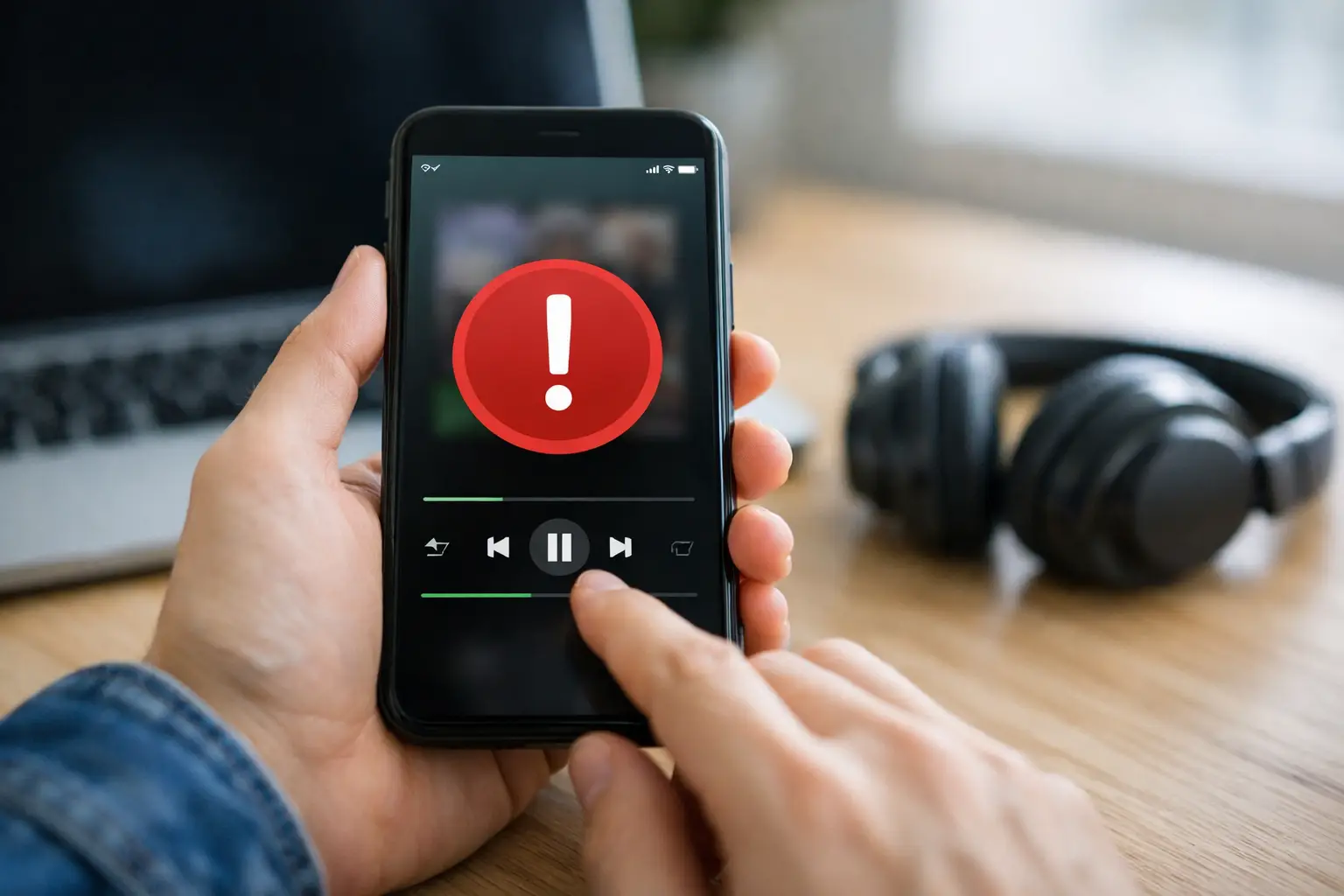
Spotify suddenly stops, skips every track, or throws a playback message right when you just want music to work. If you need to fix Spotify playback error fast, the good news is that this problem usually comes down to a handful of causes: network issues, app glitches, corrupted cache, device conflicts, or a temporary Spotify outage.
What causes a Spotify playback error?
A playback error is Spotify’s generic way of saying the app cannot start or continue a track correctly. That can happen if your internet connection is unstable, your app data is corrupted, your downloaded songs have gone out of sync, or another device is interfering with playback.
It also depends on where the error shows up. On iPhone and Android, battery settings and app permissions can get in the way. On Windows and Mac, audio output settings, firewall behavior, or old app versions are more common. If the issue appears on every device, your account session or Spotify itself may be the problem.
Fix Spotify playback error with these quick checks
Start with the fastest fixes first. In many cases, you do not need advanced troubleshooting.
1. Check if Spotify is down
If Spotify’s servers are having trouble, local fixes will not do much. Signs include tracks refusing to start on multiple devices, search loading slowly, or playlists appearing but not playing.
If everything else on your internet works but Spotify fails everywhere, wait a bit and try again later. This is especially likely if the problem started suddenly without any recent changes to your device.
2. Force close and reopen Spotify
This clears minor app hangs that can trigger playback errors.
On iPhone or Android, swipe Spotify away from recent apps and reopen it. On Windows or Mac, fully quit the app instead of just closing the window, then launch it again. If Spotify was stuck loading audio in the background, this often resets it.
3. Restart your device
A full restart clears temporary audio, memory, and network conflicts. It sounds basic because it is basic, but it works more often than people expect.
If Bluetooth audio, headphones, or speaker switching caused the issue, restarting can also restore the correct audio path.
4. Test your internet connection
Spotify needs a stable connection even if the app itself opens normally. Weak Wi-Fi, aggressive VPN routing, or switching between Wi-Fi and mobile data can trigger playback failures.
Try loading a few websites or playing a video in another app. Then switch networks if possible. If you are on Wi-Fi, test mobile data. If you are on mobile data, try Wi-Fi. If Spotify starts working on the second connection, the issue is likely network-related rather than app-related.
Clear the app cache
If Spotify opens but songs will not play, pause randomly, or keep throwing the same error, corrupted cache is one of the most common causes.
On mobile, open Spotify, go to Settings, then Storage, and clear cache. On desktop, you may need to clear cached files through the app settings or reinstall the app if the cache is not easy to remove directly.
Clearing cache will not remove your account or playlists, but offline downloads may need to be refreshed in some cases. That trade-off is usually worth it if playback has been broken for a while.
Log out everywhere and sign back in
Spotify Connect is useful until it is not. If playback is stuck trying to hand off between devices, your account session may be confused.
Open Spotify account settings and sign out of all devices, then sign back in on the device you are using. This is especially helpful if music keeps trying to play on a smart speaker, game console, TV, or another computer instead of your current phone or laptop.
If you share speakers or have used Spotify on multiple devices recently, this step can fix a surprising number of playback problems.
Update Spotify and your device
An outdated app can break playback after backend changes from Spotify. The same goes for old operating system versions, especially on phones.
Check your app store or desktop app source and install any available Spotify update. Then check for iPhone, Android, Windows, or macOS updates. You do not always need the latest system version, but being far behind can create compatibility issues.
If the error started right after an app update, the opposite may be true. In that case, wait for a patch or reinstall the app to replace broken files.
Turn off VPN, ad blocker, or firewall interference
Spotify traffic can be blocked or disrupted by network tools that inspect or reroute connections. VPNs are a common culprit, especially if the server location changes often or the connection is unstable.
Turn off your VPN temporarily and test Spotify again. On desktop, check whether firewall or antivirus software is blocking Spotify’s network access. You do not need to disable security tools permanently, but you may need to allow Spotify through them.
This fix matters more on laptops and work-managed networks than on personal phones, but it can affect any platform.
Check your audio output device
Sometimes Spotify is playing fine, but the sound is going somewhere else.
On desktop, confirm the correct output device is selected in system sound settings. If you recently used Bluetooth headphones, an external monitor, or USB speakers, Spotify may still be routing audio there. On mobile, disconnect and reconnect Bluetooth devices, or switch briefly to the phone speaker.
If the track timer moves but you hear nothing, this is one of the first things to check.
Remove and re-download offline songs
If the playback error only affects downloaded content, your offline files may be corrupted or no longer synced correctly.
Delete the affected downloads and download them again. This is more likely to help if streaming works but offline playback does not. It can take time if you have large playlists saved, so focus on the specific playlist or album causing trouble first.
This is one of those it-depends fixes. If every song fails, the issue is broader. If only downloaded songs fail, start here.
Reinstall Spotify
If nothing else works, reinstalling the app gives you the cleanest reset.
Delete Spotify completely from your phone or computer, restart the device, then install the latest version again. This removes damaged app files and resets local settings that may not be fixed by simply logging out or clearing cache.
Before reinstalling, make sure you know your login method. Some users signed up through Google, Apple, or Facebook and forget which one they used until they are locked out at the worst moment.
Platform-specific fixes
On iPhone and Android
Check battery saver and background data settings. Some phones restrict Spotify so aggressively that tracks fail to load or stop mid-play. Turn off low power mode for testing, allow background app activity, and make sure Spotify has access to mobile data if you are not on Wi-Fi.
Also check available storage. If your phone is nearly full, Spotify may struggle with cache and downloads.
On Windows and Mac
Try changing the audio quality setting in Spotify if the error appears only on certain networks. Very high quality streaming can fail more often on unstable connections.
You should also disable exclusive audio mode in system sound settings if audio apps are fighting over control. This is more common on Windows than Mac, but either platform can have conflicts with external DACs, headsets, or virtual audio tools.
On the web player
If the desktop app fails, test Spotify in a browser. If the web player works, the problem is probably local to the app. If the web player also fails, the issue may be account-related, network-related, or on Spotify’s side.
For browser playback problems, clear browser cache, allow protected content if prompted, and disable extensions that block media scripts.
When the problem is your account
If you can log in but nothing plays on any device, check whether your account is being used somewhere else. Unexpected pauses, random device switching, or strange playback behavior can point to account access problems.
Change your password and sign out everywhere if you suspect that. It is a security step, but it can also restore normal playback by kicking off an unwanted active session.
When to stop troubleshooting
If Spotify fails on multiple devices, multiple networks, and both the app and web player, the smartest move is to stop changing settings and wait. At that point, the issue is probably outside your device.
That saves time and prevents you from undoing useful settings that were not the cause in the first place.
Most users can fix Spotify playback error by clearing cache, restarting the app, switching networks, or signing out of all devices. If not, a clean reinstall is usually the fastest reset. When music stops working, the goal is not to test every theory. It is to get back to play as quickly as possible.