Streaming Buffer Troubleshooting Guide That Works
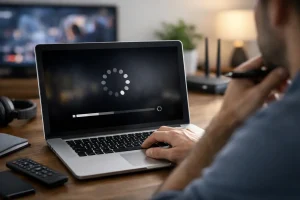
You press play, the spinner appears, and suddenly a 40-minute show turns into a stop-and-start mess. This streaming buffer troubleshooting guide is built for that exact moment – when you want the problem fixed fast, not a lecture on how the internet works.
Buffering usually means one of three things is breaking down: your connection is too slow, your device is overloaded, or the streaming service is struggling on its end. The fastest fix comes from narrowing down which one it is before changing random settings.
Streaming buffer troubleshooting guide: start with the fastest checks
Begin with the simplest test. Try another app or streaming service on the same device. If everything buffers, the issue is likely your internet, device, or Wi-Fi setup. If only one service buffers, the problem is probably tied to that app, your account settings, or a platform outage.
Next, check whether buffering happens on every device in your home or only one. If your TV buffers but your phone streams fine on the same Wi-Fi, the TV, app, or TV network settings are the likely problem. If every device is struggling, focus on the router, internet speed, or local network congestion.
A quick restart still solves more streaming issues than most people expect. Restart the streaming app first. If that does not help, restart the device. Then reboot your modem and router by unplugging them for about 30 seconds and powering them back on. It is basic, but it clears temporary glitches, stale network sessions, and app hangups.
Check your internet speed against the video quality
A lot of buffering problems come from a mismatch between the video quality you want and the speed you actually have at that moment. HD streaming usually needs a steady connection, while 4K needs much more headroom. A speed test can tell you whether your connection is dropping below what your app is trying to deliver.
Speed alone is not the whole story, though. You can have decent download numbers and still get buffering if your connection is unstable. That often shows up as short drops, high latency, or heavy congestion during evenings when more people in your area are online.
If your stream is buffering on auto quality, manually lower the playback resolution. Move from 4K to 1080p, or from 1080p to 720p, and test again. If buffering stops immediately, your issue is likely bandwidth limits or network instability rather than a broken app.
When Wi-Fi is the real problem
Wi-Fi is convenient, but it is also one of the most common causes of buffering. Distance from the router, thick walls, interference from nearby devices, and crowded apartment networks can all weaken the signal.
Move closer to the router and test again. If possible, switch from Wi-Fi to Ethernet for devices like smart TVs, streaming boxes, or game consoles. A wired connection removes a lot of the guesswork. If buffering disappears on Ethernet, your internet service may be fine and your Wi-Fi setup is the weak point.
Dual-band routers can also help. If your device is stuck on a crowded 2.4 GHz band, switching to 5 GHz may improve streaming, though range is shorter. It depends on your layout. For a TV far from the router, 2.4 GHz may reach better but perform worse. For a device in the same room, 5 GHz is often faster and cleaner.
Fix device-side problems that trigger buffering
Sometimes the network is fine, but the device is struggling to keep up. Older smart TVs, budget streaming sticks, and phones with too many apps running in the background can all create playback issues that look like internet problems.
Close other apps and background downloads. If someone is updating a game console, backing up photos, or downloading large files on the same network, streaming can suffer. On the device itself, clear memory by fully closing unused apps and restarting the system.
Storage can matter too, especially on smart TVs and streaming devices with limited free space. If an app has trouble caching video properly, playback may stutter or pause. Delete unused apps, clear app cache if the platform allows it, and install pending device updates.
Clear cache and update the streaming app
Corrupted cache files can cause buffering, freezing, or weird playback loops. In many cases, clearing the app cache or reinstalling the streaming app fixes it. This is especially useful if only one app is buffering while others work normally.
Also check for app updates. Streaming platforms regularly change video delivery methods, codecs, and ad systems. An outdated app may not work well with current servers or device firmware. If your device supports it, update both the app and the operating system before testing again.
If reinstalling does not help, sign out of the app and sign back in. It sounds minor, but account sync issues and stale session data can occasionally interfere with playback, especially after password changes or app migrations.
Router and network fixes worth trying
If multiple devices are buffering, spend a few minutes on the router. Rebooting is the first step, but not the last one. Routers can become overloaded, especially in homes with many connected devices.
Log in to your router settings if you are comfortable doing it. Look for firmware updates, which can improve stability and fix known bugs. If your router is several years old, it may simply be struggling with modern streaming demands, especially if multiple people are watching, gaming, or on video calls at once.
Quality of Service settings can sometimes help prioritize streaming traffic, but this depends on the router and how well the feature is implemented. In some homes it helps. In others it creates more confusion than benefit. If you are not sure, test simpler changes first like reducing active devices or moving the router to a more central location.
Mesh Wi-Fi systems can improve coverage in larger homes, but they are not automatic buffering cures. Poor node placement or weak backhaul between units can still cause instability. If you use mesh Wi-Fi, try connecting the streaming device to the nearest node or temporarily testing near the main router.
Browser buffering vs app buffering
If you stream in a browser, the problem may be different from buffering in a dedicated app. Too many tabs, aggressive extensions, outdated browsers, or hardware acceleration issues can interrupt playback.
Open the stream in a private window with extensions disabled. If buffering improves, one of your add-ons is likely interfering. Ad blockers, privacy tools, and script filters sometimes break video players or slow down content delivery. Update the browser, clear site data, and test another browser before assuming your internet is the problem.
Dedicated apps are often more stable than browsers for long viewing sessions, especially on lower-powered laptops. If the web version buffers constantly but the app works fine, use the app when possible.
Don’t ignore service outages and regional issues
Not every buffering problem is your fault. Streaming services can have temporary outages, overloaded servers, CDN routing issues, or regional slowdowns. If your speed is normal, other apps work, and the issue is limited to one service across multiple devices, the platform may be having trouble.
This is where people waste time resetting everything in the house when the real issue is upstream. Check whether the buffering started suddenly, whether others in your home see the same behavior, and whether the app shows unusual errors, missing thumbnails, or login problems along with playback issues. Those clues often point to a service-side issue.
When to contact your ISP or replace hardware
If buffering happens every day, across services and devices, even after basic troubleshooting, your internet plan or hardware may be the bottleneck. Contact your ISP if speed tests are consistently far below your plan, if connection drops happen often, or if buffering spikes at the same times each day.
You should also consider replacing old hardware if your modem or router is outdated, frequently overheats, or needs constant reboots. A failing router can create random buffering, weak signal zones, and speed drops that are hard to trace. If your streaming device is old and sluggish even after updates and reinstalls, replacing it may save more time than continuing to troubleshoot.
For most people, the fastest path is simple: test another app, restart everything, lower video quality, try Ethernet or a closer Wi-Fi position, then clear or reinstall the problem app. That sequence catches the majority of buffering issues without turning the fix into a weekend project.
If the problem still sticks around, slow down and isolate one variable at a time. That is usually how you get from endless spinning to a stream that actually stays on.